#Brain-Computer Interface
BCI: Speech Revival
Here's a summary of the provided text:
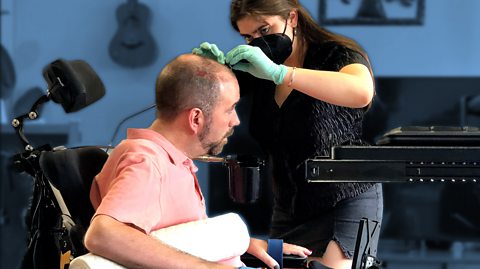
Recent advancements in brain-computer interfaces (BCIs) are enabling the translation of thoughts into text, offering a potential lifeline for individuals with paralysis or speech impairments. Researchers at Stanford University, alongside collaborations in Japan and California, are utilizing tiny electrode arrays implanted in the brain to decode neural activity associated with imagined speech. Initial successes, demonstrated in 2025 with a woman paralyzed for 19 years, have achieved speeds of up to 32 words per minute with 97.5% accuracy. Further research is exploring the nuances of inner speech, including intonation and rhythm, and investigating the involvement of areas beyond the motor cortex. Simultaneously, AI-driven techniques are being developed to reconstruct visual and auditory experiences from brain scans, opening new avenues for understanding and potentially treating neurological conditions. While challenges remain, including the need for patient effort and the limitations of current electrode technology, the field is rapidly evolving, with projections of commercialization within the next few years, driven by companies like Neuralink.
0 коментара
Остави коментар



Scroll to Top