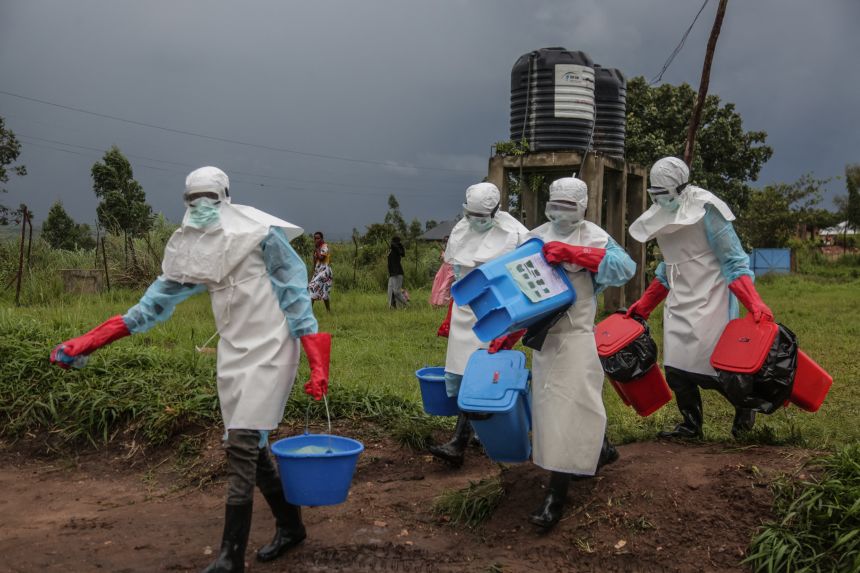
#Ebola избух
Еbola в ДР Конго
The Ebola outbreak in the Democratic Republic of Congo (DRC), particularly in Ituri and North Kivu provinces, is escalating due to misinformation, distrust, and a complex humanitarian crisis. Over 900 suspected cases, including 101 confirmed, have been identified, with 220 deaths. Despite precautions like mask-wearing by individuals like cocoa seller Hélène Akilimali, skepticism and denial persist, fueled by a delayed response, lack of trust in authorities, and the outbreak’s occurrence in a conflict zone with displaced populations. Attacks on Ebola treatment facilities, coupled with traditional mourning practices that risk transmission, are hindering efforts. The WHO has raised the risk level to “very high,” but faces challenges including a lack of approved treatments and vaccines, reduced funding, and ongoing conflict. Experts warn of a “worst-case scenario” and emphasize the critical need for isolation, community trust, and adequate healthcare resources, urging a temporary “Ebola truce” to allow for effective control.
0 коментара
Остави коментар


Scroll to Top